


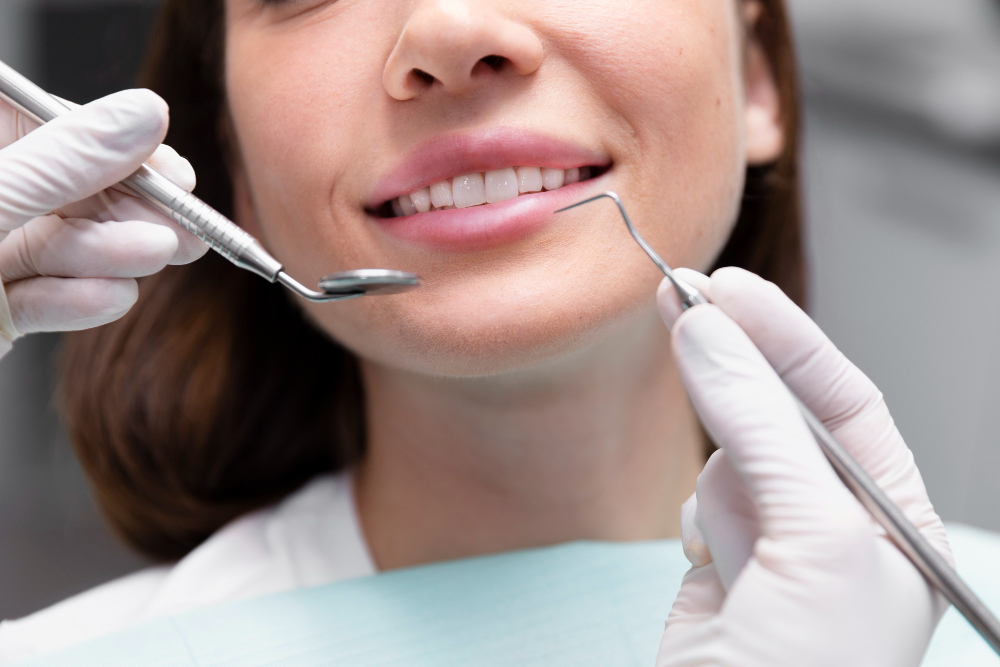
Oral and dental health is an integral part of a person’s overall health.
Healthy teeth contribute to improving a person’s general appearance, facilitating the processes of chewing and speaking, and enhancing self-confidence.
Let’s explore the world of dental care, the most important available treatments, the reasons for needing them, and how to choose the appropriate treatment.
Reasons for Needing Dental Treatments:
There are many reasons that may prompt a person to seek dental treatment, including:
- Cavities: This is the decay of the tooth enamel due to the accumulation of bacteria, stomach acid, and saliva.
- Gum diseases: Such as gingivitis and decay of the supporting bone of the teeth.
- Fractures and cracks: These may occur due to a blow or accident.
- Damaged teeth: Due to wear or repeated trauma.
- Cosmetic dental defects: Such as spacing between teeth or yellowing.
Types of Dental Treatments:
They include a wide range ofprocedures, such as:
1 – Fillings: Used to fill the cavity resulting from decay, made from various materials including:
- Metallic fillings
- Composite fillings
- Glass ionomer fillings
- Porcelain fillings
Stages of Tooth Filling:
- Anesthesia: The dentist anesthetizes the area to be filled using a local anesthetic injection.
- Decay Removal: TThe dentist uses a special tool to remove the damaged part of the tooth.
- Preparation: The cavity is prepared to accept the filling.
- Filling placement: The dentist places the filling in the cavity and shapes it to match the tooth’s form.
- Polishing: The filling is polished to make it smooth and sleek.
2- Root canal treatment: It is resorted to in order to save the damaged tooth from the inside through the following steps:
- Anesthesia: The area surrounding the tooth is anesthetized to avoid feeling pain.
- Removal of decay: The damaged part of the tooth is removed to reach the pulp.
- Cleaning the canals: The root canals are cleaned and disinfected to remove bacteria and infected tissue.
- Filling the canals: The canals are filled with special materials to prevent reinfection.
- Placing a crown or filling: In most cases, the tooth is covered with a crown or filling to protect and strengthen it.
3- Crowns: They are a cover placed on the damaged tooth to protect and strengthen it. They ensure the restoration of the tooth’s natural shape, size, and strength. Crowns are made from various materials such as porcelain, metal, and ceramics, and are characterized by their durability and ability to withstand the forces applied to them during chewing.
4 – Bridges: They often come in the form of connected crowns used to replace missing teeth by linking them to adjacent healthy teeth.
5 – Dental implants: This is a surgical procedure to implant artificial teeth into the jawbone to replace missing teeth and involves the following steps:
- Diagnosis and planning: The dentist evaluates your oral condition and develops a detailed treatment plan.
- Surgery: Surgery is performed to implant titanium fixtures into the jawbone.
- Bone healing: The bone takes several months to heal around the fixtures.
- Installing abutments: Abutments are installed on the fixtures.
- Placing crowns: Crowns are fixed onto the abutments to complete the procedure.
6- Whitening: It is used to remove yellowing and stains from the surface of the teeth, using strong whitening materials with or without the use of special light.
In-office whitening provides quick results as the most commonly used material is hydrogen peroxide or carbamide peroxide. These materials work by breaking down the colored particles that cause yellowing of the teeth.
- Orthodontics: It is used to correct problems with misaligned teeth and jaw bite.
7- Oral Surgery: It includes a range of surgical procedures to treat gum and jaw problems and is resorted to in many cases, including:
- Gum Surgery: It includes a set of procedures aimed at treating gum diseases, such as periodontal surgery and bone grafting.
- Jaw Surgery: It includes procedures to correct jaw defects, such as upper and lower jaw surgery.
- Bone Surgery: It includes procedures to reconstruct jaw bones, such as bone grafting.
- Tumor Removal Surgery: It includes the removal of benign and malignant tumors in the mouth.
- Dental Surgery: It includes tooth extraction, dental implants, and bridge placement.
How to choose the appropriate treatment: The patient should consult a dentist to select the appropriate treatment for their condition, as the dentist will diagnose the problem and assess the overall condition of the mouth and teeth, then provide a comprehensive treatment plan.
Any action or decision taken before consulting the dentist is considered dangerous and can lead to significant problems in the jaw, teeth, and overall body health.

